At last, we arrived at the final stop of our journey, the place where our hemp and organic cotton ideas are transformed into beautifully crafted garments. At the main office in Qingdao, we found ourselves experiencing yet another face of China. Here, serene mountains had given way to bustling cities of glass and steel, marked by soaring skyscrapers and wide four-lane streets. This was a China where technological progress outpaces much of old Europe, and where daily life flows seamlessly through QR codes, mobile phones and apps. In a quiet testament to both innovation and sustainability, we continued our journey by electric car to our production facilities, also powered by solar energy.
The Hemp Story: Part 3
Our Sustainability Manager’s recent journey to China uncovered the
story of one of nature’s most remarkable fibres - hemp. From the fields
where it grows to the factory where fibres become fabric,
every step revealed an extraordinary blend of heritage, innovation, and human
touch. Read on for Liene’s story of how people, skill,
and passion come together to create one of POETRY's favourite
fabrics.
THE HANDS WHO MAKE OUR CLOTHES
At last, we arrived at the final stop of our journey, the place where our hemp and organic cotton ideas are transformed into beautifully crafted garments.
At the main office in Qingdao, we found ourselves experiencing yet another face of China. Here, serene mountains had given way to bustling cities of glass and steel, marked by soaring skyscrapers and wide four-lane streets. This was a China where technological progress outpaces much of old Europe, and where daily life flows seamlessly through QR codes, mobile phones and apps. In a quiet testament to both innovation and sustainability, we continued our journey by electric car to our production facilities, also powered by solar energy.
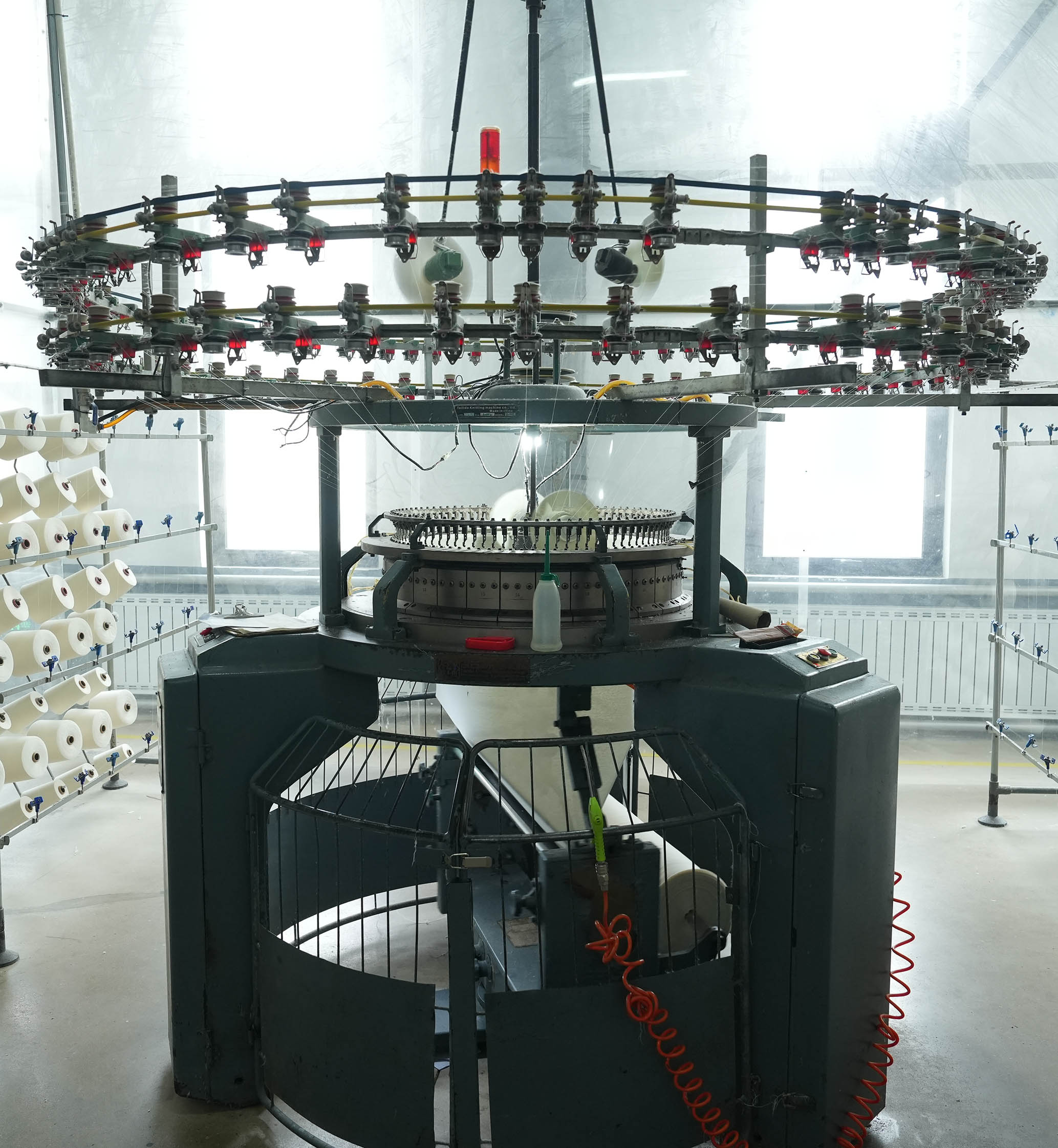
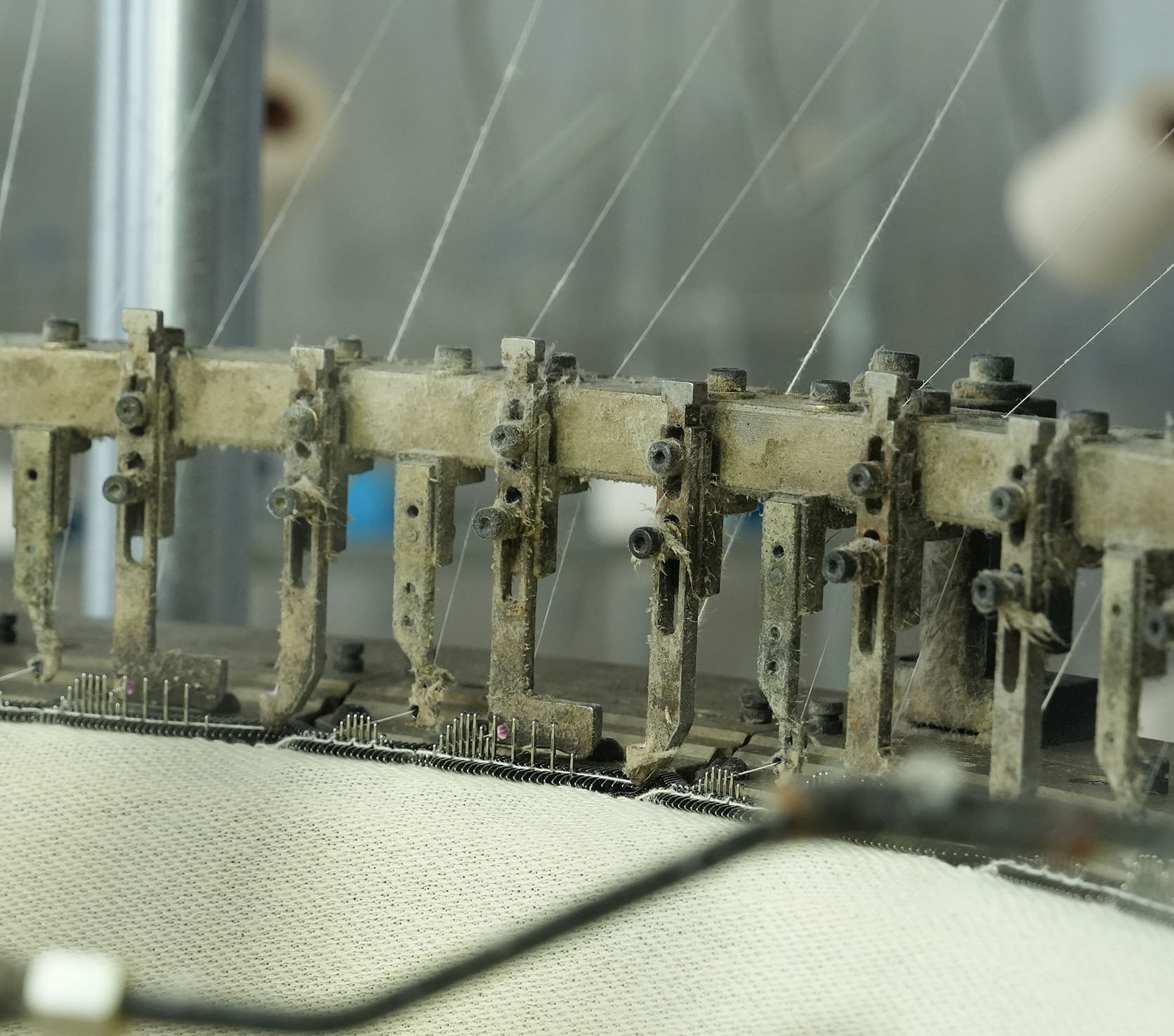
Our first stop inside the factory was the jersey knitting section. Though I had witnessed the process before, its ingenuity still amazed me. All our T-shirt, top and hoodie fabrics are created on fine-gauge circular knitting machines. In essence, it’s the same principle as a grandmother’s hand-knitted jumper, but on a far more intricate and industrial scale.
Here, hundreds of tiny needles are arranged in a circle, pulling multiple threads from above while a continuous large tube of fabric emerges below. Unlike flat knitting, circular knitting never pauses or reverses. The threads move in an uninterrupted flow, dramatically increasing the knitting speed. To boost efficiency even further, the machines knit with multiple threads at once, producing several knitted rows simultaneously. It is simple and yet an impressive technology with each machine filing an entire room.
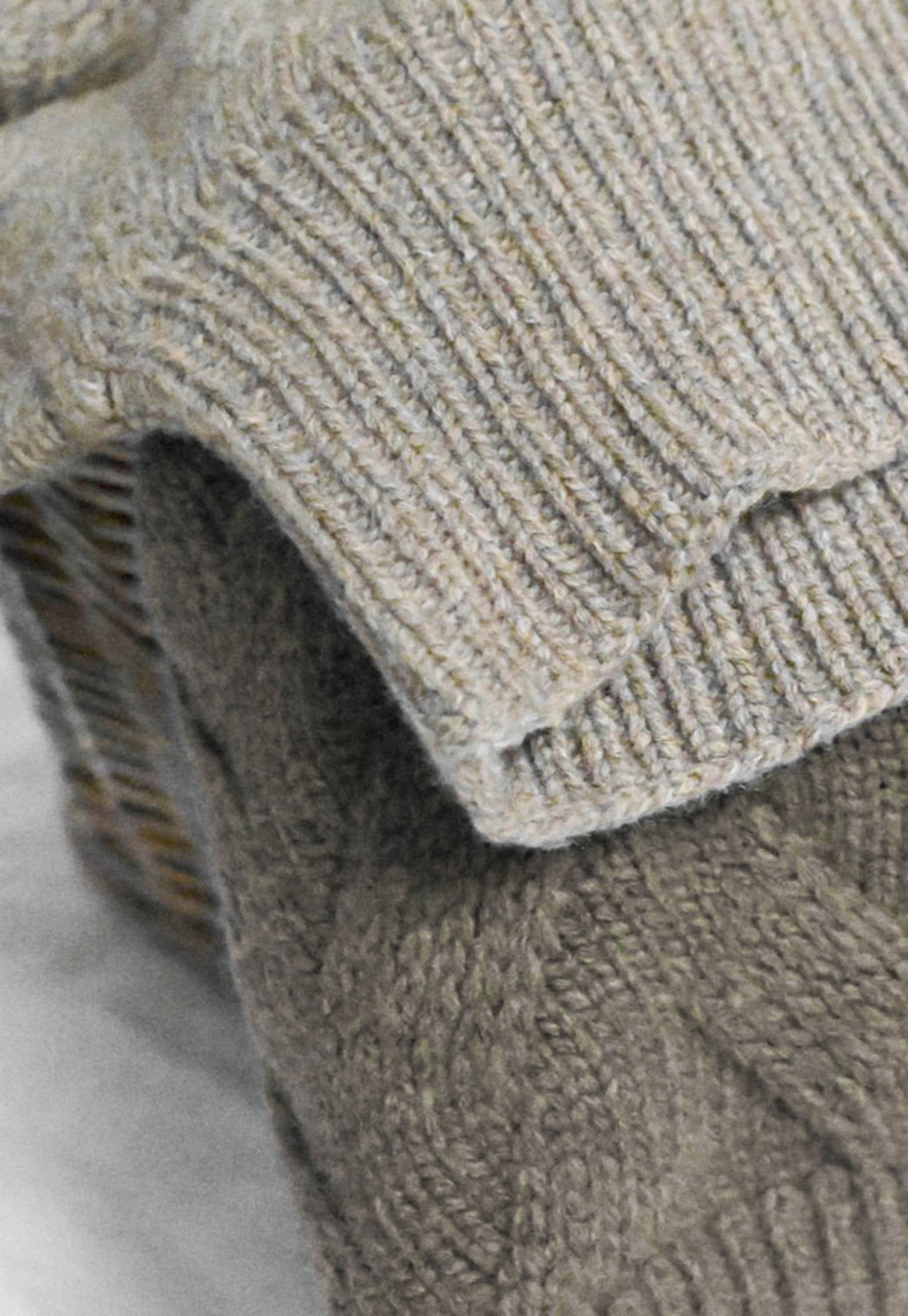
In one of the rooms, a technician was setting up a machine to knit loopback jersey, one of my favourite fabrics for cosy hoodies, with its smooth surface and soft, fluffy reverse. Only when he slowed the knitting process to almost a halt could I truly follow the movement: each needle opening, catching a thread, and pulling it through the loop beneath, a delicate ballet of engineering and precision.
At the main office in Qingdao, we found ourselves experiencing yet another face of China. Here, serene mountains had given way to bustling cities of glass and steel, marked by soaring skyscrapers and wide four-lane streets. This was a China where technological progress outpaces much of old Europe, and where daily life flows seamlessly through QR codes, mobile phones and apps. In a quiet testament to both innovation and sustainability, we continued our journey by electric car to our production facilities, also powered by solar energy.
Our first stop inside the factory was the jersey knitting section. Though I had witnessed the process before, its ingenuity still amazed me. All our T-shirt, top and hoodie fabrics are created on fine-gauge circular knitting machines. In essence, it’s the same principle as a grandmother’s hand-knitted jumper, but on a far more intricate and industrial scale.
Here, hundreds of tiny needles are arranged in a circle, pulling multiple threads from above while a continuous large tube of fabric emerges below. Unlike flat knitting, circular knitting never pauses or reverses. The threads move in an uninterrupted flow, dramatically increasing the knitting speed. To boost efficiency even further, the machines knit with multiple threads at once, producing several knitted rows simultaneously. It is simple and yet an impressive technology with each machine filing an entire room.
In one of the rooms, a technician was setting up a machine to knit loopback jersey, one of my favourite fabrics for cosy hoodies, with its smooth surface and soft, fluffy reverse. Only when he slowed the knitting process to almost a halt could I truly follow the movement: each needle opening, catching a thread, and pulling it through the loop beneath, a delicate ballet of engineering and precision.
PRECISION COLOUR
Our next stop was one of the most essential elements of fashion design- colour. Each season, designers carefully select the palette for every garment and send small samples to the factory to be matched with absolute precision. The process begins with formulating the exact dyestuff recipe required to reproduce the shade. For fabrics, this step is now almost entirely automated: a colour sample is placed into a compact, microwave-sized machine that analyses its properties and transmits the data to a robotic system, which measures and mixes the dyes with flawless accuracy. And yet, despite all this advanced automation, the final approval still rests with the human eye, the most sensitive instrument for detecting the subtlest mismatch.
The dyeing itself takes place in massive barrel-like machines, where preparation, dyeing, and rinsing happen in sequence, with water and dyes added and replaced automatically. Garment dyeing, where colour is applied after the garment has been made, follows a similar process, though in smaller barrels. Here, however, there are no automated machines ensuring the colour match; the art lies entirely in the eye of the master dyer.
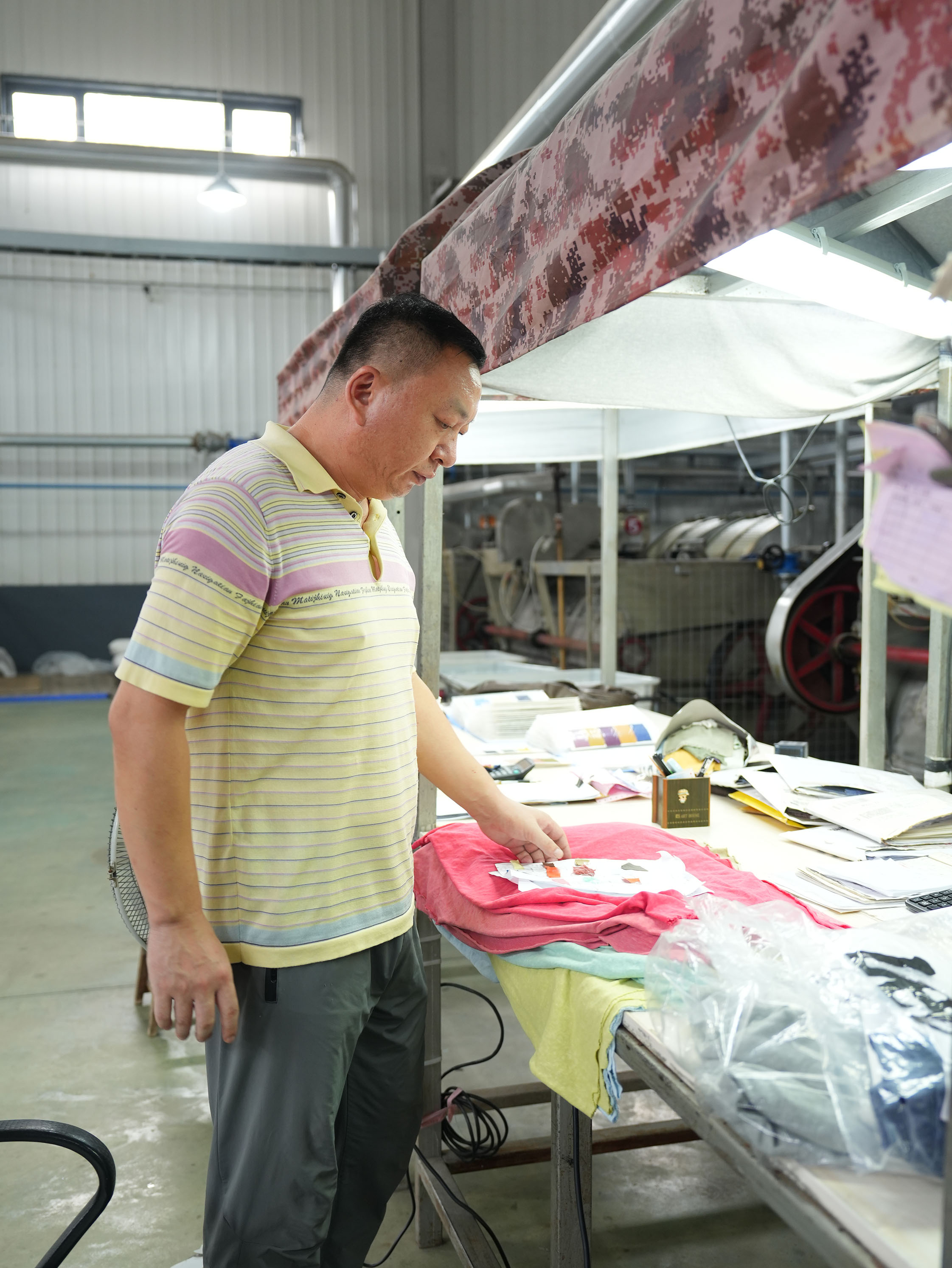
I am introduced to the man in charge as he works on the shades for our upcoming season, studying the tiny colour samples sent from our London designers. Lifting them close, then holding them at a distance, he examines each one intently before quietly noting down the recipe for the shade.
I watch in surprise as he swiftly writes down a list of dyestuff components, as though the tiny swatch just a few centimetres wide carries its formula hidden in plain sight, legible only to him. When I ask how he can be so certain, he smiles and says that experience is his guide, usually it takes just three or four fabric trials to adjust the recipe until the colour is perfect. Curious, I press further, wondering if he references a colour library of formulas. Instead, he gestures toward a shelf stacked with overflowing binders. It is a living archive of every shade he has created for us since 2019, each one matched by his expert eye and carefully recorded by hand. His expertise should not come as surprise.
Our next stop was one of the most essential elements of fashion design- colour. Each season, designers carefully select the palette for every garment and send small samples to the factory to be matched with absolute precision. The process begins with formulating the exact dyestuff recipe required to reproduce the shade. For fabrics, this step is now almost entirely automated: a colour sample is placed into a compact, microwave-sized machine that analyses its properties and transmits the data to a robotic system, which measures and mixes the dyes with flawless accuracy. And yet, despite all this advanced automation, the final approval still rests with the human eye, the most sensitive instrument for detecting the subtlest mismatch.
The dyeing itself takes place in massive barrel-like machines, where preparation, dyeing, and rinsing happen in sequence, with water and dyes added and replaced automatically. Garment dyeing, where colour is applied after the garment has been made, follows a similar process, though in smaller barrels. Here, however, there are no automated machines ensuring the colour match; the art lies entirely in the eye of the master dyer.
I am introduced to the man in charge as he works on the shades for our upcoming season, studying the tiny colour samples sent from our London designers. Lifting them close, then holding them at a distance, he examines each one intently before quietly noting down the recipe for the shade.
I watch in surprise as he swiftly writes down a list of dyestuff components, as though the tiny swatch just a few centimetres wide carries its formula hidden in plain sight, legible only to him. When I ask how he can be so certain, he smiles and says that experience is his guide, usually it takes just three or four fabric trials to adjust the recipe until the colour is perfect. Curious, I press further, wondering if he references a colour library of formulas. Instead, he gestures toward a shelf stacked with overflowing binders. It is a living archive of every shade he has created for us since 2019, each one matched by his expert eye and carefully recorded by hand. His expertise should not come as surprise.
THE HUMAN TOUCH
Walking into the sewing hall, the human touch became even more evident. Sewing remains one of the few garment-making processes that has stayed virtually unchanged for centuries, involving the most people and relying heavily on skilled hands. These skills, once common in households all over the world, have largely been lost in many countries.
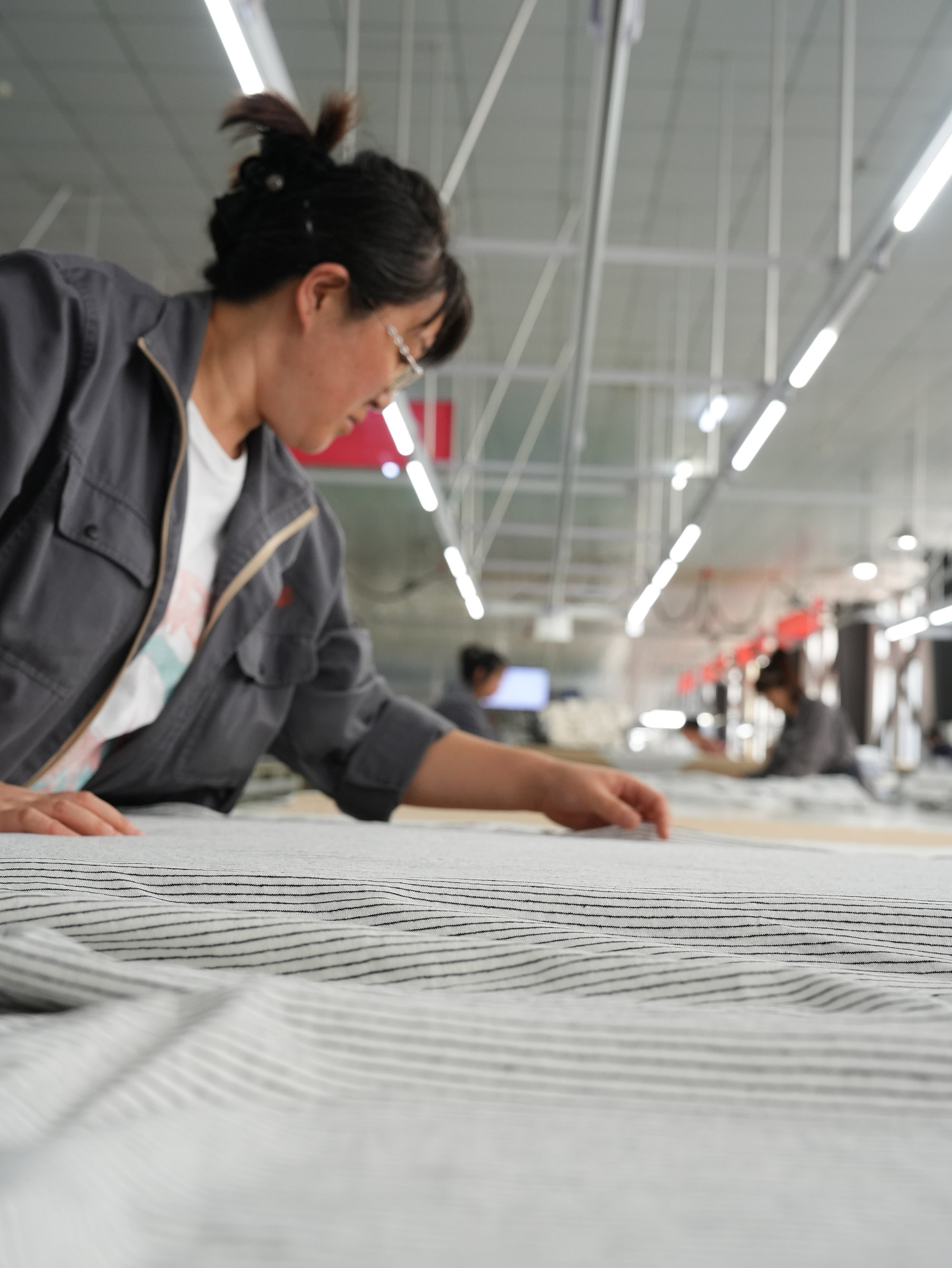
As we entered, a seamstress at a large table was working on a sample for a newly designed garment. Carefully tracing the pattern onto fabric and cutting it by hand, she was creating a one-off test piece that would later be sent for fitting on a model. Before any garment reaches full production, designs pass through a cycle of iterations, developed in close collaboration between the designers in London and the team here. Each sample is handcrafted and tested on models to check its fit, drape, and intended look.
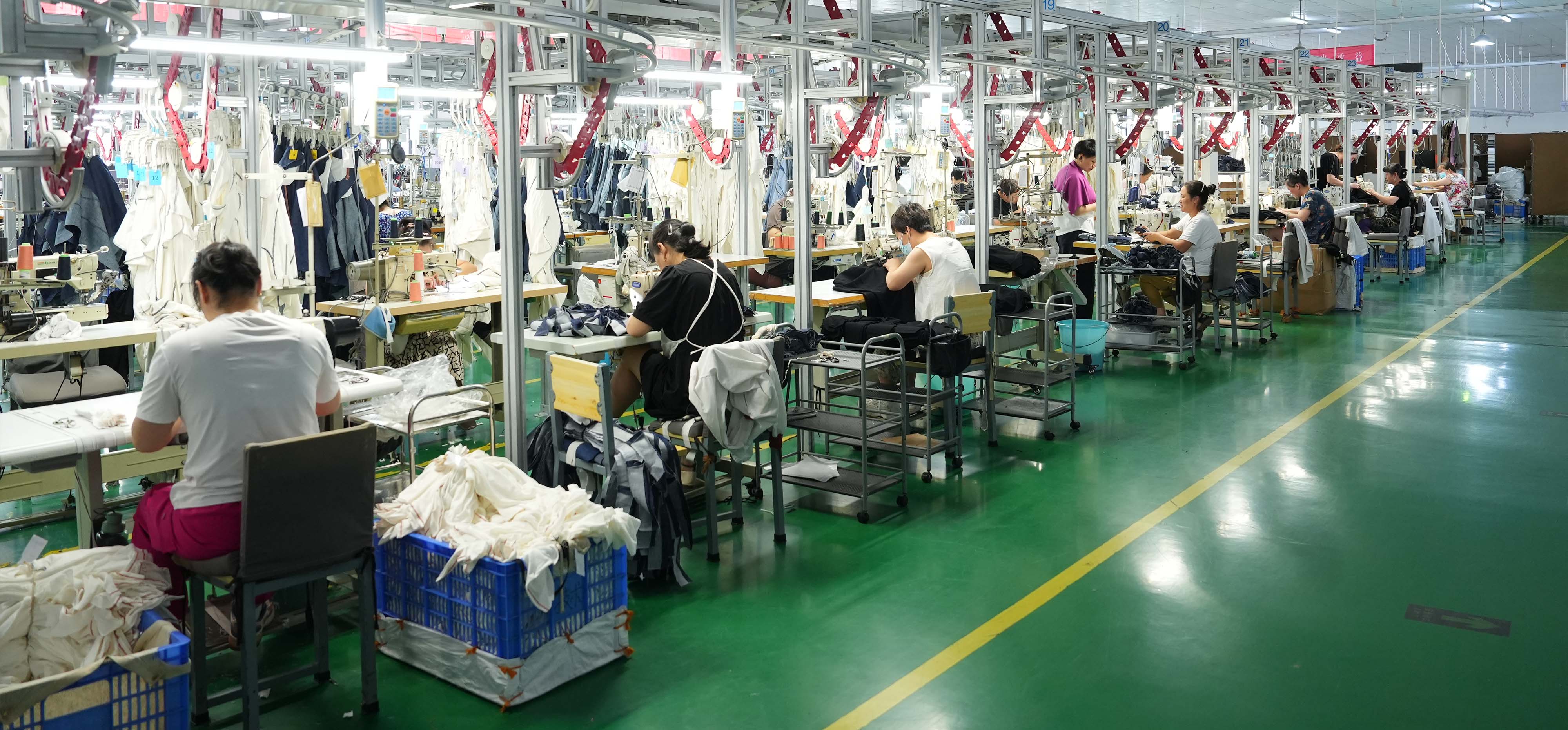
Once a design is finalised, the fabric is cut into panels and sent to the sewing line. On long tables, rows of sewing machines hum as each garment moves along a hanging system, appearing at first like floating bundles of cloth. Seamstress by seamstress, the bundles are stitched and reshaped until they become recognisable garments. Less experienced seamstresses handle simpler seams, while the most senior focus on intricate detailing. Depending on the garment’s complexity, a team of eight seamstresses can complete anywhere between 100 and 400 pieces in a day. When a design calls for special detailing, the garment is removed from the line and sewn individually by the most skilled hands.
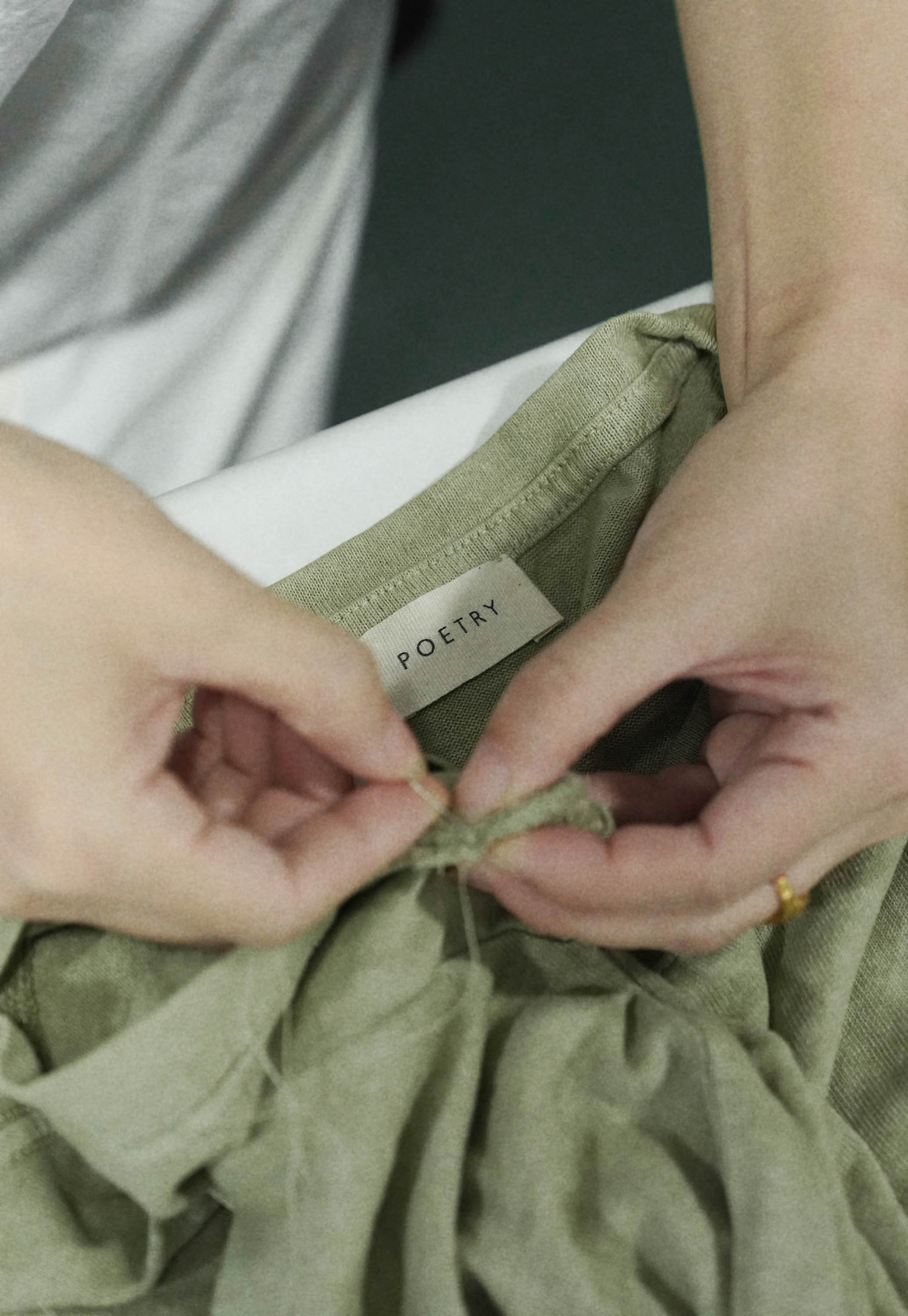
At another table, a seamstress was adding the final touches, sewing the fabric by hand. With needle and thread, she worked on each garment individually, perfecting details where machines cannot reach. Every piece was then carefully checked for faults, steamed, folded, and packed, ready to be shipped. In the sewing process alone, each garment is handled by at least twenty skilled hands. Back in the main office, I met the teams responsible for pattern cutting, quality control, creating measurements for each size, and developing new fabrics and yarns
Walking into the sewing hall, the human touch became even more evident. Sewing remains one of the few garment-making processes that has stayed virtually unchanged for centuries, involving the most people and relying heavily on skilled hands. These skills, once common in households all over the world, have largely been lost in many countries.
As we entered, a seamstress at a large table was working on a sample for a newly designed garment. Carefully tracing the pattern onto fabric and cutting it by hand, she was creating a one-off test piece that would later be sent for fitting on a model. Before any garment reaches full production, designs pass through a cycle of iterations, developed in close collaboration between the designers in London and the team here. Each sample is handcrafted and tested on models to check its fit, drape, and intended look.
Once a design is finalised, the fabric is cut into panels and sent to the sewing line. On long tables, rows of sewing machines hum as each garment moves along a hanging system, appearing at first like floating bundles of cloth. Seamstress by seamstress, the bundles are stitched and reshaped until they become recognisable garments. Less experienced seamstresses handle simpler seams, while the most senior focus on intricate detailing. Depending on the garment’s complexity, a team of eight seamstresses can complete anywhere between 100 and 400 pieces in a day. When a design calls for special detailing, the garment is removed from the line and sewn individually by the most skilled hands.
At another table, a seamstress was adding the final touches, sewing the fabric by hand. With needle and thread, she worked on each garment individually, perfecting details where machines cannot reach. Every piece was then carefully checked for faults, steamed, folded, and packed, ready to be shipped. In the sewing process alone, each garment is handled by at least twenty skilled hands. Back in the main office, I met the teams responsible for pattern cutting, quality control, creating measurements for each size, and developing new fabrics and yarns
Throughout this journey, from field to finished garment, it has been extraordinary to witness the wealth of knowledge, tradition, and skill that still lives within garment making. There can be no overstatement of the care invested into each piece: from the designers in London to the experts growing hemp, spinning yarn, creating fabric, dyeing it, and sewing it. Every stage is a dialogue between craft and purpose, drawing on centuries of heritage while embracing the possibilities of modern innovation. In every stitch lies a journey, and above all, connections where people with skill, expertise, and passion meets to create something beautiful.
Discover the hemp collection here